Safety-critical Design at eurofunk
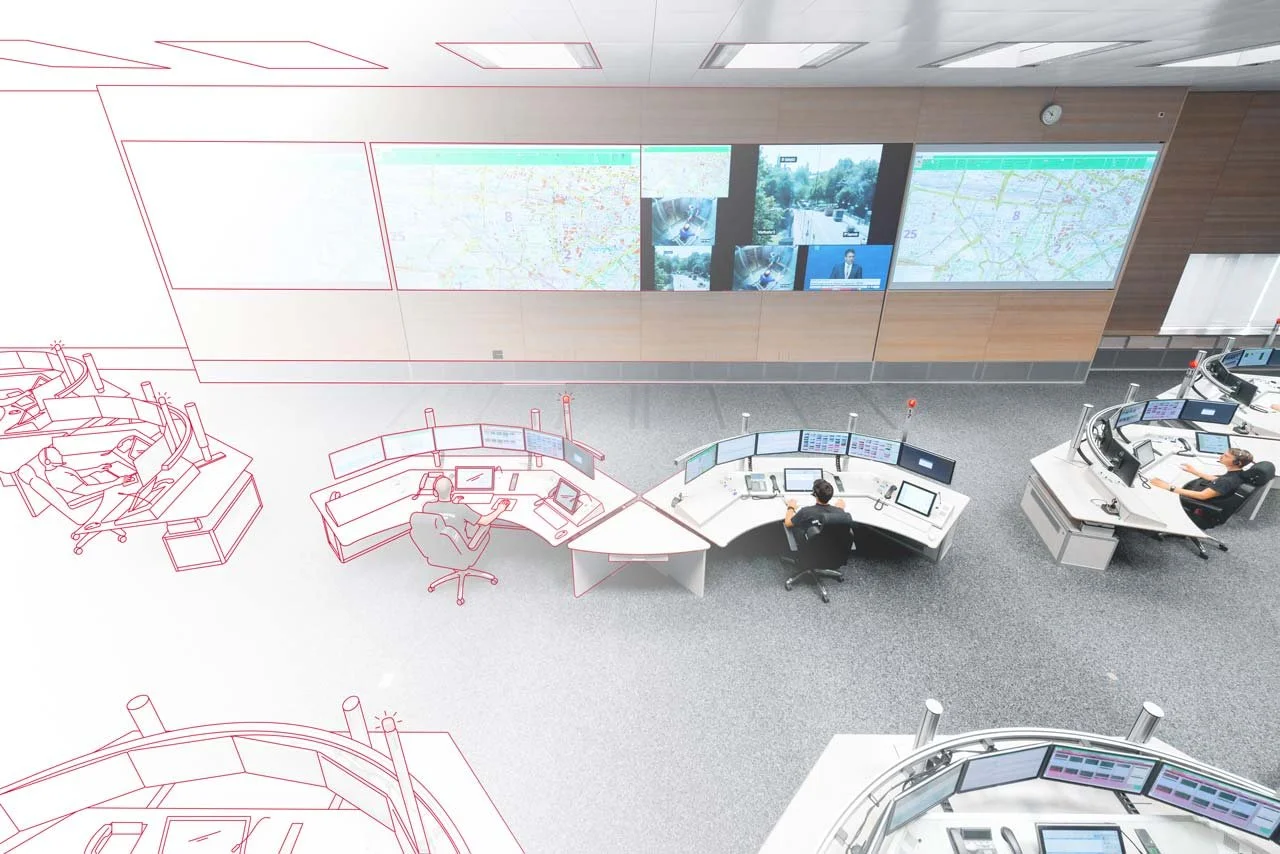
eurofunk builds command-and-control systems for police, fire brigades and ambulance services. Their software runs in emergency control centres around the clock and connects dispatchers with responders in the field. I designed across this ecosystem, from complex desktop tools for dispatchers to mobile apps for first responders.
Because of an NDA, I can't show screens or internal details. This page describes my role, my process, and what designing for safety-critical situations taught me.
Company:
eurofunk Kappacher GmbH
Role:
UX Designer
Year:
2024-2026
UX design for emergency services
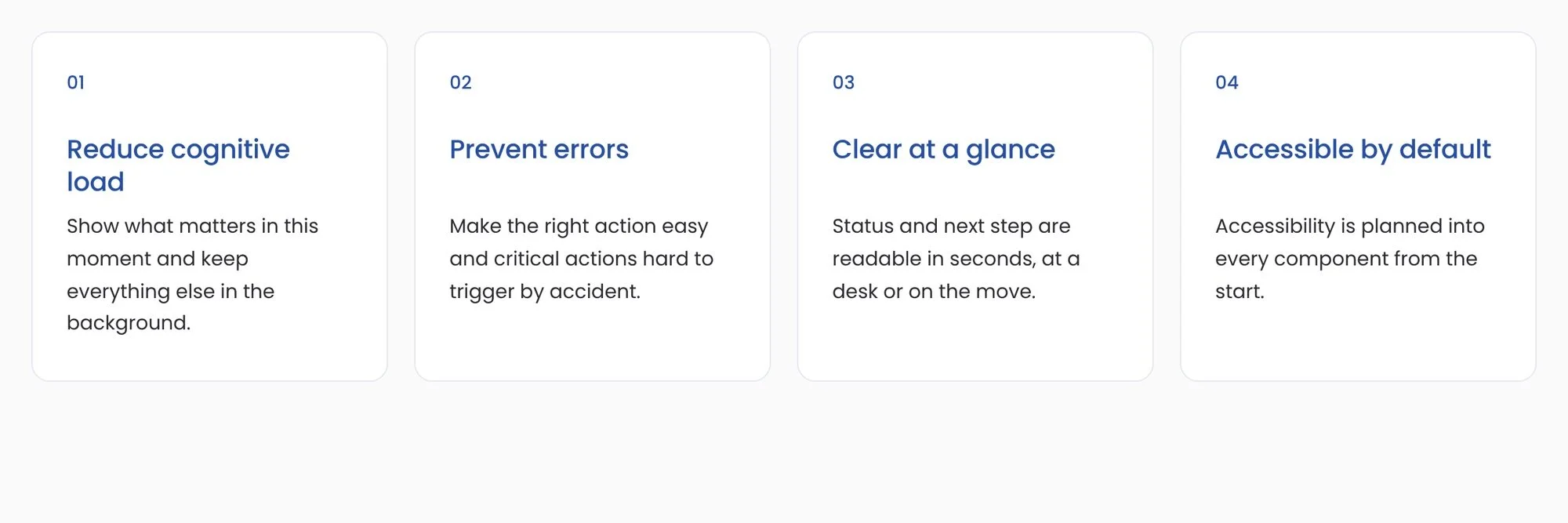
When someone calls for help, every second counts. For two years at eurofunk, I designed software for emergency control centres and first responders. The context ranged from dispatchers at multi-screen workstations to crews on the move in emergency vehicles, and to people reaching emergency services in new ways. Whatever the context, the goal was always the same: reduce cognitive load, make the next step obvious and prevent errors when there is no time for them.
My main focus was a large redesign of a core part of the command and control software that dispatchers use every day. From the very first day, I worked closely with product managers, product owners, developers and consultants who are in direct contact with customers. Involving everyone early gave us a shared understanding of the problems and helped us make realistic decisions faster.
I started with interviews to understand how dispatchers work and where they struggle. To see beyond what people tell you, I observed them using the existing system in their daily work, followed by walkthroughs and more interviews. Watching real work under real pressure brought up problems and workarounds that would never have come up in a meeting room.
Based on these insights, I developed concepts and first designs. I tested early ideas quickly with hallway tests to catch usability issues before taking them further. With more developed designs, I held feedback sessions with users, including on site with police and fire brigades, and refined the designs step by step. This cycle of understanding, designing and validating shaped all of my work at eurofunk.
Principles I design by:
Design system and accessibility
Alongside my UX work, I worked on eurofunk's design system together with developers. We built a token library so design and code shared the same foundations. We documented the system thoroughly in Figma and Confluence, with component descriptions, usage guidelines, a changelog and accessibility notes. That made it easy for designers and developers to work with, and ready for AI tools.
My focus was accessibility according to the European Accessibility Act. I checked contrast, focus states and keyboard use for every component, using tools like Stark, and tested the components with NVDA. I tested while developers were building them, so we could fix issues right away. In emergency services, the software has to work for everyone, and that starts with the components.
What I take with me
Two years in emergency services changed how I approach design. The biggest lesson came from watching people work. In interviews, dispatchers explained their tasks. When I observed them, I saw the small workarounds and moments of hesitation behind those tasks. Those details shaped the most important design decisions, and observation is now a fixed part of how I start a project.
I also learned how to do good research when users are hard to reach. Dispatchers and emergency crews work in tight shifts and can't simply leave their posts for a usability test. So I made the most of every contact: I went to them, observed them during their actual work and planned feedback sessions carefully so every minute counted. In between, I worked closely with consultants who are in regular contact with customers, and used quick hallway tests to catch usability issues early. This way, the time with real users could go into the questions only they could answer. Working on such a complex system also taught me to understand the domain deeply myself, so I could ask the right questions and spot problems faster.
These are things I want to keep doing in every project: stay close to users, even when access is limited, test early, work as one team and build accessibility in from the start.